Thursday, July 7, 2016

2 Corinthians 4:1-18 Sermon Notes for 160628PM@TBC

Introduction
 Review Background
  Historical background----------------
·         Church established (Acts 18:1-18)  18 m0s. there during 2nd Missionary Journey
·         1 Corinthians to correct problems. (while in Ephesus)
·         Paul made a painful visit (2 Cor. 2:1)
·         Severe unpublished letter sent with Titus (7:5-16) resulted in repentance.
·         Onset of false teachers who maligned Paul’s ministry.  They questioned his ministry, reliability, and motives.
·         2 Corinthians in anticipation of another visit.
1. Theme of 2 Corinthians
q  Suffering and weakness are the pattern of Gospel ministry.
  Oratory and style do not make up for Gospel content.

2. Outline
q  Overview of book (2 Corinthians)----------------
1-7  General Defense of New Covenant Ministry
8-9  Right Response (ill. by Jerusalem offering)
10-13  Personal Defense of Paul’s Ministry / Apostleship

q  3. Segway
Matthew 13.44
"Again, the kingdom of heaven is like treasure hidden in a field, which a man found and hid; and for joy over it he goes and sells all that he has and buys that field.”
Treasures were often buried for safekeeping. The most likely circumstance envisioned here is that of a peasant who, while working the field of a wealthy landowner, found the treasure but covered it again lest the landowner claim it for himself. The peasant then invested all his own resources into that field to procure the treasure. Stories of finding lost treasures naturally circulated among the poor; Jesus uses the story line to stir his hearers to seek for a treasure far greater than any on earth.[1]

q  4. Read passage   The whole chapter 4.1-18----- 2 Corinthians 4
Take note of the four references to God the Father.  One of them is a pronoun.

q  5. BIG IDEA: 
After the glorious pronouncement God has shown in our hearts and given the light of the knowledge of God in Jesus Christ, Paul addresses his current sufferings and pressures.  How does he keep going?
Verses 7-18 Paul gives his key to persevering in the face of afflictions.  Paul was convinced of this truth…
“Our temporary afflictions are worth eternal glory.”
In this passage, Paul will progress through a discussion of his physical sufferings and how the spirit of faith kept him from loosing heart.
 q  I.  Clay Jars  (7-12)
But we have this treasure in earthen vessels, that the excellence of the power may be of God and not of us.
We are hard-pressed on every side, yet not crushed;
we are perplexed, but not in despair;
persecuted, but not forsaken;
struck down, but not destroyed—
10Always carrying about in the body the dying of the Lord Jesus, that the life of Jesus also may be manifested in our body.  11 For we who live are always delivered to death for Jesus’ sake, that the life of Jesus also may be manifested in our mortal flesh.  12 So then death is working in us, but life in you.
A. Treasure  (7)  refering back to 4.6
“But we have this treasure” refers to God’s indwelling Spirit that magnifies, reveals, and forms the person of Christ in our lives. (cf. John 16:8-14; Romans 8.9; Colossians 1.27; 2 Peter 1:3-4).  --Bob Utley
B. Jugs of Mud  (7-8)
·       Paul’s frailty caused many to question his standing as an Apostle.  (cf. 1 Corinthians 2:1-5)
·       à     2 Corinthians 12.7-10     Turn to passage and read.
7 And lest I should be exalted above measure by the abundance of the revelations, a thorn in the flesh was given to me, a messenger of Satan to buffet me, lest I be exalted above measure.  8 Concerning this thing I pleaded with the Lord three times that it might depart from me.
9 And He said to me, "My grace is sufficient for you, for My strength is made perfect in weakness."
Therefore most gladly I will rather boast in my infirmities, that the power of Christ may rest upon me.  10 Therefore I take pleasure in infirmities, in reproaches, in needs, in persecutions, in distresses, for Christ's sake. For when I am weak, then I am strong. 
·       Gideon -- 32K, 10K, to 300
·       “It may be that our greatest obstacle to spiritual usefulness is not our inabilities, but our abilities.”  (This quote is most certainly not original.)   

C. Dying to Live  (10-12)
dying of the Lord Jesus 
·       “The dying of Jesus refers to the constant hardships Jesus experienced, which were reproduced in the hardships of Paul.”  --David Woodall in the Moody Bible Commentary, p 1812
·       “And the suffering was a result of attacks against the Lord Jesus, not Paul and other believers.  Those who hated Jesus took out their vengeance on those who represented Him (cf. John 15:18-21; Gal. 6:17; Col. 1:24).”  John McArthur Bible Commentary  p1626
·       Dr. John Henry Jowett said, “Ministry that costs nothing, accomplishes nothing.”[2]
·       The test of a true ministry is not stars, but scars.  From henceforth let no man trouble me: for I bear in my body the marks [brands] of the Lord Jesus” (Gal. 6:17).[3]

q  APPLICATION: 
I can just imagine what kind of shape Paul was in when he entered a new city after having been beaten, put in jail, barely escaping, etc.
Our frailty provides an excellent backdrop for the power of God in us.
“Do not lose heart when you feel fragile and plain and broken.  It’s not your ability.”

q  II.  The Spirit of Faith  (13-15)
13 And since we have the same spirit of faith, according to what is written, I believed and therefore I spoke,” we also believe and therefore speak, 14 knowing that He who raised up the Lord Jesus will also raise us up with Jesus, and will present us with you. 15 For all things are for your sakes, that grace, having spread through the many, may cause thanksgiving to abound to the glory of God.

A. Paul believed as the Psalmist
Psalm 116.10 
(2 Peter 1.1)   Peter Balla in CoNTUoOT
·       vv. 3, 8-19In the first nine verses of Psalm 116 the psalmist gives thanks for God’s intervention in his need. …  He cried for God’s deliverance, and God saved him from deep dangers, even from death. 
·       Then the psalmist gives thanks, using the expression of lifting up “the cup of salvation” (116:13 [cf. Paul’s use of “the cup of blessing” in 1 Cor. 10:16]): “I will lift up the cup of salvation and call on the name of the Lord.”
·      It is interesting to note that in the psalm the phrase “I said” can be regarded as an introduction to what the psalmist said, but Paul stops at this point, thus emphasizing the act of speaking per se.
·       Paul’s choice of the psalm passage is excellent from the point of view of content: he shares the sufferings with the psalmist and also his faith that enables him to speak (to bear witness to Christ) boldly (so also Kruse 1987: 108).
·      “The psalmist spoke from a context of deliverance from suffering.  He had trusted in God, and God had vindicated him (Ps. 115:12-19).   Thomas Constable
·      It is of great significance that Paul uses a quotation from the OT in order to emphasize his faith shared with the psalmist.  His faith is in line with the faith of his ancestors; he stands in continuity with the faith of the OT writers.[4]

B. The resurrection of the dead…(14)
14 knowing that He who raised up the Lord Jesus will also raise us up with Jesus, and will present us with you.
à 1 Corinthians 15.19
19 If in this life only we have hope in Christ, we are of all men the most pitiable.  20 But now Christ is risen from the dead, and has become the firstfruits of those who have fallen asleep.   21 For since by man came death, by Man also came the resurrection of the dead.   22For as in Adam all die, even so in Christ all shall be made alive.
It was
Paul’s confidence in the resurrection,
Paul’s confidence that He who had begun a good work in him would complete it
that kept him going.
C. The glory of God.   (15)
15 For all things are for your sakes, that grace, having spread through the many, may cause thanksgiving to abound to the glory of God.
Romans 8
28 And we know that all things work together for good to those who love God, to those who are the called according to His purpose.  29 For whom He foreknew, He also predestined to be conformed to the image of His Son, that He might be the firstborn among many brethren. 
This verse parallels Romans 8:28 and gives us the assurance that our sufferings are not wasted: God uses them to minister to others and also to bring glory to His name.[5]
Ephesians 1.3-6   predestined us to adoption, ..to the praise of His glory

Paul seems to have in view people coming to the Lord that he had no personal part in.  His rejoicing was that people were thankful to God
q  APPLICATION:
When not getting the credit upsets us, it may be a red flag.
TS:  Faith redirects our focus and gives us the confidence in things eternal.

q  III.  Fruits of Affliction (16-18)
16 Therefore we do not lose heart. Even though our outward man is perishing, yet the inward man is being renewed day by day. 17 For our light affliction, which is but for a moment, is working for us a far more exceeding and eternal weight of glory, 18 while we do not look at the things which are seen, but at the things which are not seen. For the things which are seen are temporary, but the things which are not seen are eternal.
A. The inward man being renewed  (16-17)
The outward body is in a state of decline.
The beatings and hardships Paul had experienced would have taken their toll on his physical body.
If Paul had had an inward, self centered perspective, it would have been easy for him to become bitter and discouraged.
B. The Coming Glory  (18)
“Affliction” versus “glory,”
“momentary” versus “eternal,”
“lightness” versus “weight”—these contrasts tell why it is that confidence trumps giving up.[6]
Hebrews 11. 24-26
24 By faith Moses, when he became of age, refused to be called the son of Pharaoh's daughter, 25 choosing rather to suffer affliction with the people of God than to enjoy the passing pleasures of sin, 26 esteeming the reproach of Christ greater riches than the treasures in Egypt; for he looked to the reward.
Dr. A.W. Tozer used to remind us that the invisible world described in the Bible was the only “real world.” If we would only see the visible world the way God wants us to see it, we would never be attracted by what it offers (1 John 2:15–17).[7]

q  APPLICATION:  Do not lose hope.


[1] Craig S. Keener, The IVP Bible Background Commentary: New Testament (Downers Grove, IL: InterVarsity Press, 1993), Mt 13:44.
[2] Warren W. Wiersbe, The Bible Exposition Commentary, vol. 1 (Wheaton, IL: Victor Books, 1996), 643.
[3] Warren W. Wiersbe, The Bible Exposition Commentary, vol. 1 (Wheaton, IL: Victor Books, 1996), 643.
[4] Peter Balla, “2 Corinthians,” in Commentary on the New Testament Use of the Old Testament (Grand Rapids, MI;  Nottingham, UK: Baker Academic;  Apollos, 2007), 765.
[5] Warren W. Wiersbe, The Bible Exposition Commentary, vol. 1 (Wheaton, IL: Victor Books, 1996), 643.
[6] Robert H. Gundry, Commentary on the New Testament: Verse-by-Verse Explanations with a Literal Translation (Peabody, MA: Hendrickson Publishers, 2010), 701.
[7] Warren W. Wiersbe, The Bible Exposition Commentary, vol. 1 (Wheaton, IL: Victor Books, 1996), 644.

Wednesday, June 15, 2016

2016 Father's Day Family Devotion Guide (TBC)

2016 Father's Day Family Devotion Guide
A few tips:
· Make your preparation simple.  If you will thoughtfully read through the lesson ahead of time, you should be adequately prepared.
· Just the act of having a family devotion or worship time says something to your kids about what it important.  It can be a challenge to make family devotions an enjoyable and profitable time, but it will never happen if you don’t try.
· Plan a time when everybody can participate.  Make sure they know not to make other plans for that time.  Keep it short. Keep it simple.
· Let  the children interrupt and ask questions at the right times. This is not just a sermon. Let everybody ask, speak, tell, share, and participate. You want to know what they are thinking and whether they understand.
· Include everyone, even the young ones. While it may seem easier to have a quiet time with just the older ones, it is so important to include your little ones in this family time.  As they grow and mature, they will learn to sit quietly during the devotion time.
· It’s important to remember their ages.  If you have small children, you are probably not going to have a deep teaching time.  Try to include different approaches that are age appropriate.
· Let them be children. They’re fidgety. They’re impatient. They’re children. Try to keep a semblance of order during this time together, but be realistic and patient.  Yelling at them to be quiet and sit still defeats the purpose.
· Turn off all electronics. I know this may seem like a given, but it needs to be mentioned.

  --------------------------------------
I. Prayer:
· The leader (probably dad) should start this time by asking God to bless your time together. 
· You might also want to encourage the family to take turns thanking God for something they appreciate about Dad.

III. Scripture Reading:  Luke 15:11-32*
(The theme of this parable is the Father's love and open welcome to all those who repent and turn to Him.  We all need Christ's grace and salvation whether we have sinned grievously or been faithful to church traditions and work.)
11Jesus then told another story.  There was a man that had two sons. 12 The younger son went to his father. “Father, please give me now my part of your things”, he said. So, the father gave both sons their part of his things. 13 After a few days, the younger son sold what his father had given to him. Then he left home. He took with him the money and everything that he had. He went on a long journey to a country far away. He wasted all his money there and he did many bad things. 14 Then after he had spent everything, something bad happened in that country. There was almost no food anywhere. So, the young man had nothing to eat. 15 He went to a man from that country and he asked for work. The man sent him into his fields to watch his pigs. 16 Nobody gave him anything to eat. So he even wanted to eat the food that the pigs were eating.
17 Then the son began to think about what he had done. “My father has many servants”, he said to himself, “and they have plenty of food to eat. They even have extra food. But I shall die here because I do not have any food. 18 So I will go to my father. ‘I have done bad things against God’, I will tell him. ‘And I have done them against you. 19 So I am not good enough for you to call me your son any longer. Instead, please accept me as one of your servants.’ ”
20 So he stood up and he returned to his father. But he was still a long way from the house when his father saw him. He felt very sorry for his son and he ran towards him. Then he put his arms around him and he kissed him. 21 “Father”, the son said, “I have done bad things against God and against you. So I am not good enough for you to call me your son.” 22 But the father shouted to his servants. “Hurry!” he said. “Fetch the most beautiful coat that we have. Put it on him and put a ring on one of his fingers. Put shoes on his feet. 23 Fetch the young cow that we keep ready to eat on a special day. It is already fat. Kill it and prepare it. We shall eat a big meal and we shall be happy together. 24 I thought that this son of mine was dead. But now he has returned to me alive. I thought that he had left me for all time. But now he has come home.” Then they began to be happy together.
25 While these things were happening, the older son was working in the field. On his way back to the house, he heard music. He heard people who were dancing. 26 So he spoke to one of the servants. “What is happening?” he asked him. 27 “Your brother has returned”, the servant replied. “Your father has killed the young fat cow for him. He did this because your brother is alive and well.” 28 When he heard this, he was very angry. He would not go into the house, so his father came out. “Please come in”, he said. 29 “Listen”, replied the older son, “I have worked for you for many years. I have always obeyed you. But you never even killed a young goat for me. If you had done that, I could have been happy with my friends. We could have had a meal together. 30 But now this other son of yours has returned. He has wasted all the money that you gave to him. He has spent it on women of the streets. But you have killed the young fat cow just for him.” 31 “My son”, said his father, “you are always with me. All that I have is yours. 32 We thought that your brother was dead. But now he has returned to us alive. We thought that he had left us for all time. But now he has come home. So we must be happy together.” 
* We have provided the passage in the easy to read and understand Easy English Bible.  If your children are older you might prefer to use another version like the English Standard Version.

 III. Lessons and applications
· 15:11 Jesus told another story...”  Jesus told three stories to the Pharisees and scribes after they had complained that Jesus ate with bad people.  What were the other two stories about?  What is the common theme to all three of these stories?  (Luke 19:10)  Are there people you don’t like because of bad things they do?  Do we need to agree with them before we can treat them kindly?  (Matthew 5:43-48)  (youtube.com/watch?v=LHuyDLMTCJs)
· 15:12 “the father gave”  What did the father do for his sons?  What does this teach us about our heavenly Father?  What did the young son do with what his father gave him?  Was this the right thing to do?  Why? 
(Parents: It is important here to use the son’s foolish actions to highlight the father’s unconditional and generous love.  This is a picture of our heavenly Father.  Also, remember that the son’s actions were unwise for two reasons.  First, He was selfish and ungrateful toward his father.  Second, He spent his money foolishly on bad things  and was left with nothing.)
· 15:17 “the son began to think about what he had done”  What caused the younger son to think about his father?  What did he decide to tell his father about what he had done?  Can you think of a Bible word that describes what the son told his father?  (Confess: Psalm 51; Proverbs 28:13; 1 John 1:9; Repent: Mark 1:15; Acts 17:17-20, 30-31; Romans 2:4; 2 Peter 3:9
· 15:20 “when his father saw him.”  What did the father think when he saw his son?  (Mark 1:40-41; 6:34)  What did he do?  Does that surprise you?  Why?  What did verse 24 say that they felt?  Why did the father feel that way? 
· 15:25 “the older son was working ”  Why was the older son so upset about the party?  Was he right about the things he and his younger brother had done?  Why did the father say he should still be happy? (He gave more than one reason)  (Luke 15:7)  What did this brother need to repent of?  Salvation is a gift based on Jesus has done on the cross, not on what we do.
· Name this parable: The traditional name for this story is “The Prodigal Son.”  That emphasizes how bad the son was when the father welcomed him back.  Some people like to call it “The Loving Father” or  “The Prodigal God.”  Why do you think they would call God “prodigal?”  Think about what this story is teaching and talk about what your would call it.
Challenge each family member to examine themselves 
whether they have repented and turned, with faith in Christ, 
to their loving heavenly Father. 

IV. Family Activities: Below are some activities that will help reinforce the theme.  Pick one or two of these that will work best for your family.
· LOST AND FOUND RUN: Play this game like a Hide and Seek game, or hide things that the children have to FIND as the teacher calls out an item. When FOUND, the children will shout -- LOST BUT FOUND, etc.
· PRODIGAL SON PUPPET: Give each child a brown or white paper lunch bag, as well as markers, yarn for hair, eyes, and brown felt for the children to glue items on the paper bag to make a "prodigal son". Sit in a circle after the bags are completed and have the bag puppets take turns in telling what bad choices he made and what a celebration his father had for him when he returned home. The parent can ask the bag puppets questions if the children have trouble telling part of the story.
Further study on interpreting parables:
(tulsabible.blogspot.com/2016/06/interpreting-jesus-parables.html)


 (Optional Hymns and Songs Suggestions)  
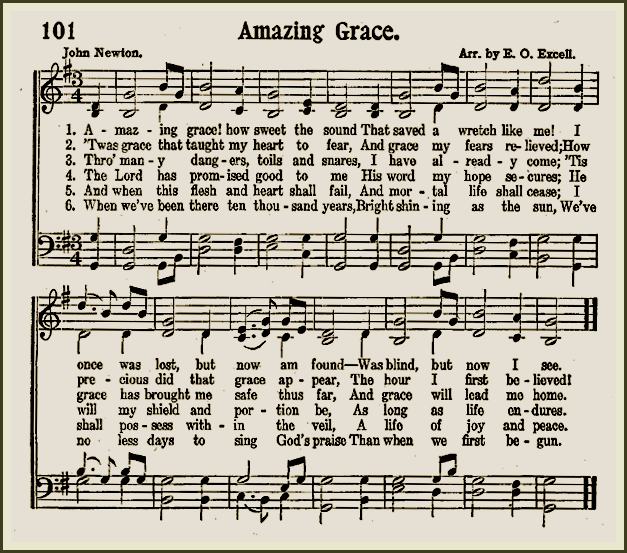
· “Amazing Grace”  (ramshornstudio.com/1bec73290.jpg)
· “How Deep the Father’s Love for Us” (youtube.com/watch?v=YV2zMZ-nZ7k)
· “Unfailing Love” by Chris Tomlin  (youtube.com/watch?v=k_MyC6kJzPg)
· “Prodigal Son Song” by the Donut Repair Club (youtube.com/watch?v=bzh3LmQskzI)

V. Closing:
· A father should remember that he was a husband first, and one of the best things he can do for his children is to love and cherish their mother.  His example will help set the tone for the whole family.
· The father should take a few minutes to speak words of blessing and encouragement to his wife and children, and then close in prayer for them.  If the father is not available, mom or an older child can close in prayer.
Extras:
Bible Trivia about Fathers: Who am I?
1.  I felt so honored when the prophet arrived to say that God had chosen to anoint one of my sons as king! Who am I?  
2. My father was in such disbelief when he was told that I was going to be born that he was literally dumbstruck. What is his name?   --
3. I can't believe that one of my sons is best friends with my worst enemy! Who is my son?    --
4. I had a son named Isaac. Who am I?
5.  I was the son of Hachaliah and the cup-bearer to king Artaxerxes. Who am I? 
6. I was one of the seven daughters of Jethro, the Midianite priest. I met a very helpful man while out watering my father’s flocks who I later married.  Who was he?
Jokes:
· Science teacher: When is the boiling point reached?
Science student: When my father sees my report card!
· Son: For $20, I’ll be good.
Dad: Oh, yeah?  When I was your age, I was good for nothing.
Amber’s dad puns:
· When I was young, I wanted to study archaeology, but my dad thought it was nothing more than a lot of skullduggery .
· I had to decide between making  a salad with my mom or playing catch with my dad, it was a toss-up.
· A clown decided to retire and hand over the business to his son. His son said, 'I don't know dad, those are big shoes to fill'.
---------------------------------------------
Trivia answers below:  


1. Jesse– 1 Samuel 16:12. Zechariah– Luke 1:8-203. Jonathan- 1 Samuel 20:30-31;  
4. Abraham- Genesis 21:35. Nehemiah – Nehemiah 1:16. Moses.– Exodus 2:16-21  

10 Tips for Understanding and Interpreting Jesus’ Parables

1. Understand the nature of the parables.
Parables are tools to compare something physical to something spiritual. Jesus begins several parables by saying “The Kingdom of God is like…” so he could tie an abstract concept (the Kingdom of God) to something more concrete and visible (like a mustard seed in Matthew 13:31-32).
Jesus chose to teach in story form because stories engage the mind and emotions of listeners like no other form of teaching. One great example of this is when Jesus painted a beautiful picture of what “loving your neighbor as yourself” meant when he told the Parable of the Good Samaritan (Luke 10:29-37).
2. Understand the purpose of parables.
Jesus taught with parables for two main purposes: to explain truth to some (see Luke 10:36-37) and to keep truth hidden from others (see Mark 4:10-12 below). For those eager to follow God, parables were memorable illustrations of a kingdom principle. For those opposed to God’s plans, the meaning of the parables would be hidden in a form of judgment.
And when he was alone, those around him with the twelve asked him about the parables. And he said to them, “To you has been given the secret of the kingdom of God, but for those outside everything is in parables, so that “they may indeed see but not perceive, and may indeed hear but not understand, lest they should turn and be forgiven.”  Mark 4:10-12
3. See the parable in its proper context.
Often times a parable has a brief introduction that will greatly affect its meaning and interpretation. Luke 18:1 shares a key for interpreting the parable that followed when it said, “And he told them a parable to the effect that they ought always to pray and not lose heart. Other times, a parable’s context will inform us that it is directed toward a certain group of people (for example the Pharisees in Luke 15).
Parables are often grouped thematically, and understanding the main thread that ties related parables together can shed light on their overall meaning and interpretation. Luke 15 groups three parables together (the Parable of the Lost Sheep, the Parable of the Lost Coin, and the Parable of the Prodigal Son) to respond to the Pharisees and scribes who were hypocrites that did not understand the grace of God.
4. Remember the cultural gap.
Some of the images and metaphors have rich meaning to people in Jesus’ time that are not as easy to recognize for those living in the 21st century. The Parable of the Ten Virgins (Matthew 25:1-13) makes much more sense when one understands the Jewish marriage customs present at the time of Jesus. A good study Bible will likely have helpful notes to aid you in your study.
5. Parables usually have one main point.
Our understanding of a parable and its details should all flow from the main point (or points). This is a crucial step, because the main point of the parable is the reason Jesus said it in the first place!
Some recommended questions for finding the main point are:
1. Who are the main characters?
2. What occurs at the end?
3. What occurs in quotation marks?
4. Who/What is the focus of the story?  [1]
6. Take notice of surprise details.
Certain parables have shocking and unexpected twists in the story that help us understand the point Jesus was trying to make. Although a careful reading will usually expose the special details, sometimes these details are hard to pick up on due to cultural differences and our familiarity with the parables.
An example of an important and surprising detail is found in the Parable of the Unforgiving Servant (Matthew 18:23-35). The surprise detail of this parable is the difference in the amounts of money forgiven by the king and by the servant (thousands of dollars compared with millions of dollars), which shows the great magnitude of God’s forgiveness of us and how that should lead us to forgive others.
7. Not every minor detail has significant meaning.
Because parables are stories, they sometimes need supporting information in order for the main idea of the parable to make sense and have its power.
For example, in the Parable of the Ten Virgins, the story shares that five virgins were wise and the other five foolish. It would be wrong to conclude that 50% of people are wise and 50% of people are foolish. The fact that there were ten virgins total with five wise and five foolish is an inconsequential detail that merely helps the story progress. Often times pressing on insignificant details can make the story unravel and make one miss the entire point of the story.
8. Notice “stock imagery” in the parables.
“Stock imagery” is a term coined by Robert Plummer for many of the images used repeatedly throughout the parables. Many times repeated images are paralleled in the Old Testament and would have been common spiritual ideas understood by Jesus’ original hearers.
For example, whenever there is a Master/Judge/King figure in the parables, that signifies God, while sheep/servants/workers illustrate followers of God.
9. The ending of parables is very important.
While longer parables share a lot of important details along the way, the key to understanding the implications of the parable is often found in its conclusion. In the parable of the Wheat and the Tares (Matthew 13:24-30), the ending reveals what happens to the wheat and tares respectively and shows the ultimate purpose of the parable which is to indicate that God will judge who is really part of the church at the final judgment.
10. Be careful with allegorical interpretations of parables.
There have been some throughout church history who have thought that the meaning of parables was hidden and unable to be explained without applying special meanings to the text. The problem with this is that they normally disregarded the plain reading of Scripture and offered confusing ideas from the mind of the interpreter.
An example of this is Origen’s interpretation of the Good Samaritan. He reads several details into the text: the man walking down the road signifying Adam, the priest signifying the Law, the Levite signifying the Prophets, the donkey signifying the body of Christ that bore our sins, and the Samaritan signifying what Christ did for us.
There is no basis for such an interpretation. It is much easier to understand when you remember the context: Jesus used the parable to answer a man’s question, “Who is my neighbor?” The Great Reformer Martin Luther called some allegorical interpretations of the parables “amazing twaddle” and “altogether useless.” Avoid these types of interpretations!
As you dig into the deep riches of Christ’s parables, it is our prayer that you develop a deeper grasp on the grace of God, an amplified experience of the Kingdom of God , and a hunger to follow hard after Christ.
Sources:

Also check out: 
Interpreting Parables by Michael Vlach / theologicalstudies.org. 

"Why We Call God 'Father'

Excerpts from 
"Why We Call God 'Father'

Fro at least the past 40 years, traditional language for God has come under fire.

Underlying this view is a belief that terms like father and mother are mere human characterizations of God, shaped by specific cultural and backgrounds.

But before we jump onto the theological bandwagon, we need to reexamine the reasons for the use of masculine terms for God in Scripture and throughout the Christian tradition.

Most ancient Near Eastern societies had a goddess as the main cult figure or at least to complement a male god--Asherah in Canann, Isis in Egypt, Tiamat in Babylon.  If patriarchy is responsible for cultures portraying God as male, then we would expect goddess worship to reflect a matriarchal society--one in which women were given superior status or at lease are equal to men.  But this is not the case.

In the new Testament, God's fatherhood conveys two distinct ideas.
First, it refers to the internal relationship within the Trinity. ... Jesus reveals a unique relationship between the Father and Son that constitutes the beginning of the Trinitarian doctrine.  
Second, the father metaphor points to God as the Creator (e.g., Isa. 64:8, Mal. 2:10) "from whom every family in heaven and on earth derives its name" (Eph. 3:15).

The Christian story is not merely an illustration.

The term Trinity is simply shorthand for the Christian story of God the Father, who sent his Son Jesus Christ and gave us his Holy Spirit.

If we leave out God's nature as Father, Son, and Holy Spirit, we risk turning the Christian story into another story.

By using this divine in its liturgy, the church is saying that this story, and no other, creates and shapes her unique identity as the people of Jesus Christ.  A generic name, even with many descriptive adjectives, dows not adequately distinguish the Christian identity.

Father is not a culturally conditioned term but the proper name of God given by divine revelation.

Read the entire article in Christianity Today